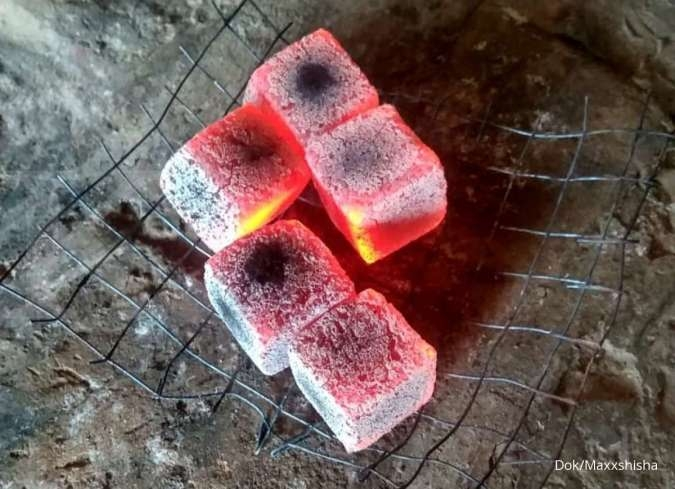
Briquette coconut – Briquettes are a source of energy from biomass used as oil and point obtained from fossils. Different types of briquettes can be made from raw materials we find in everyday life, such as coconut, rice, charcoal, sawdust, corn cobs, leaves, etc.
The production of briquettes is carried out by pressing or compacting, the aim of which is to increase the calorific value per unit area of the biomass used as an alternative energy source so that large amounts of energy are produced with a relatively small amount of biomass.
Most often, coconut shells or coconut husks are thrown away, which are today the raw material for charcoal briquettes. Coconut shells can be used as raw materials to be converted into charcoal, which can be transformed into innovative value-added products.
Advantages of Indonesian charcoal briquettes
According to research, briquettes made from coconut shell charcoal have many advantages over briquettes made from charcoal or other fuels. See the following description.
- Renewable energy
Renewable energy is obtained from natural resources and is generated by sustainable biological processes. This means that it will always be maintained since nature constantly produces it. - Biomass
Coconut charcoal briquettes are included in the biomass category. Biomass is a type of renewable energy that refers to biological materials obtained from living organisms. Some examples of biomass sources include firewood, coconut, garbage, and alcohol. - Maximum produced heat
Unlike charcoal briquettes, the heat produced by coconut shell charcoal briquettes is relatively high, reaching 7000 cal. Thus, high-calorie fuel makes our cooking process faster and more perfect. - Non-toxic
Since making charcoal briquettes from coconut shells are produced naturally, these briquettes are safe for us. Coconut shell charcoal briquettes are made using tapioca flour as an adhesive for briquette dough obtained from cassava. As a result, these briquettes are considered safe and non-toxic.
Coconut Briquette is Very Environmentally Friendly
If you burn charcoal briquette coconut, it will usually give off a lot of smoke; for example, you can see that when grilling satay, a lot of smoke comes out, even though the satay smells good.
The coconut shell charcoal briquette differs from traditional charcoal in that it creates very little smoke when burned, almost none, making it an environmentally friendly option that does not pollute the air.
- Switch to green energy.
This is one of the most well-known benefits of coconut shell charcoal briquettes. Go Green Energy is an expression for environmentally friendly energy sources. The advantages of coconut charcoal briquettes are that they are made from raw coconut shell materials and additional tapioca flour ingredients; if burned, they will not smoke, so these coconut wood briquettes are very environmentally friendly. - Substitute for coal
As we often see, the fuel that is mainly used in industry is coal. But over time, based on several studies, it turned out that massive coal exploration will harm nature. Coconut shell charcoal briquettes are considered safe and non-toxic because the only additional ingredient used is tapioca flour, which is obtained from cassava and serves as an adhesive for the briquette dough - Long burning time
Coconut shell charcoal briquettes have a long burning time, around 2-3 hours non-stop. This makes it a relatively efficient and effective fuel. - As an alternative to using a gas stove
Almost all of us use a gas stove for cooking. We are frustrated, especially now that gas prices continue to rise and sometimes consumption is still low.
Therefore, with the development of technology and time, several coconut shell charcoal briquette manufacturers have seen their potential in making briquette stoves. The goal is to replace the kitchen gas stove that households have used so far.
Maybe you like to read the following article Coir geotextiles Uses in Various Soil Conditions and Its Advantages