The global demand for sustainable fuel and industrial raw materials continues to grow, making coconut charcoal one of the most valuable export commodities from tropical countries. For exporters and importers, understanding the coconut charcoal HS code export classification is essential to ensure smooth international trade, accurate documentation, and compliance with customs regulations.
What Is Coconut Charcoal?
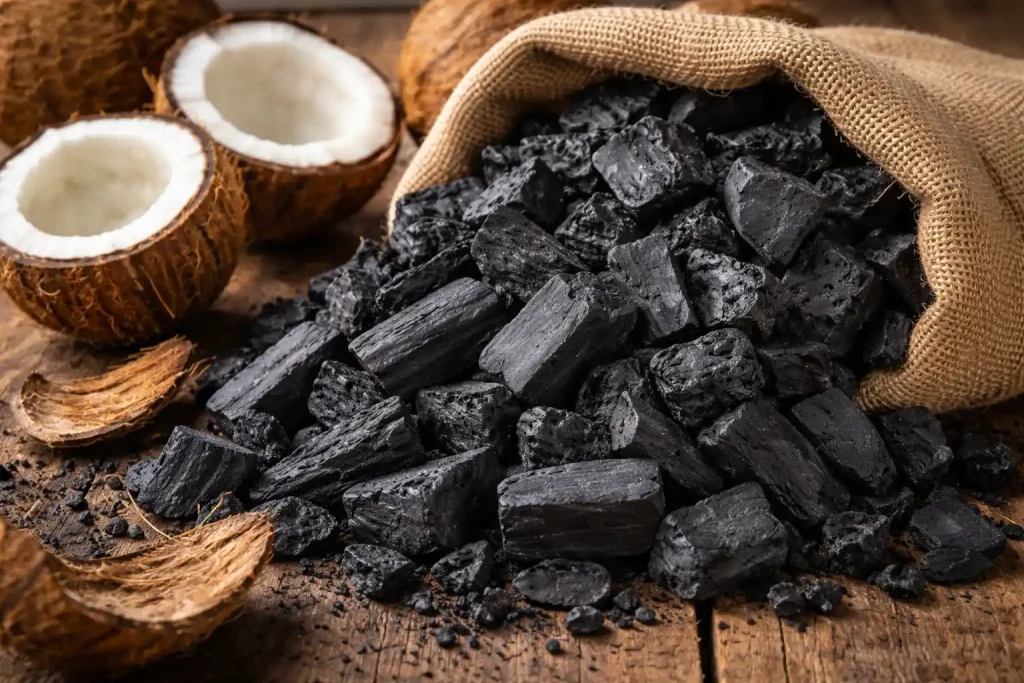
Coconut charcoal is produced by carbonizing coconut shells under controlled temperatures. This process creates a high-carbon material widely used in multiple industries, including shisha or hookah charcoal production, barbecue fuel, water filtration, and activated carbon manufacturing. Because coconut shells are agricultural waste, coconut charcoal is considered an eco-friendly and renewable resource, increasing its appeal in global markets.
Importance of HS Code in Coconut Charcoal Export
The Harmonized System (HS) Code is an internationally standardized numerical classification used to identify traded products. Every exported product must be declared under a specific HS code to determine tariffs, taxes, and customs procedures.
For businesses involved in coconut charcoal trade, using the correct coconut charcoal HS code export classification helps:
- Avoid customs delays
- Prevent incorrect tax calculations
- Ensure compliance with importing country regulations
- Simplify international shipping documentation
- Improve transparency between buyers and suppliers
Incorrect classification can result in shipment holds, penalties, or additional inspection costs, which can significantly affect delivery schedules.
Common HS Codes Used for Coconut Charcoal Export
Although HS codes may vary slightly by country extension, coconut shell charcoal is commonly categorized under:
-
HS Code 4402 – Wood charcoal, including shell or nut charcoal, whether or not agglomerated.
Many exporting countries classify coconut shell charcoal within this category because it falls under biomass charcoal products. However, exporters should always confirm the exact subheading required by the destination country’s customs authority.
Export Documentation Requirements
When preparing coconut charcoal shipments, exporters typically need the following documents:
- Commercial Invoice
- Packing List
- Bill of Lading
- Certificate of Origin
- Phytosanitary or fumigation certificate (if required)
- Export declaration using the correct HS code
Including the accurate coconut charcoal HS code export classification ensures that customs systems automatically recognize the product category, reducing administrative complications. Businesses looking to scale can explore suppliers specialized in coconut shell charcoal bulk export to secure large-volume shipments efficiently.
For more detailed guidance on export processes, regulations, and trade tips, you can also refer to resources like iresepi.net for practical insights.
Global Market Demand
International demand for coconut charcoal continues to increase due to environmental awareness and industrial applications. Key importing regions include:
- Middle East (shisha charcoal market)
- Europe (eco-friendly fuel and filtration industries)
- United States (BBQ and activated carbon production)
- East Asia (industrial processing)
Buyers increasingly prefer suppliers who understand export compliance, logistics efficiency, and standardized product classification.
Tips for Successful Coconut Charcoal Export
To succeed in international markets, exporters should:
- Verify HS code accuracy with freight forwarders or customs brokers
- Maintain consistent product specifications
- Use moisture-proof packaging for container shipping
- Provide clear export documentation
- Understand destination-country import duties
Proper preparation not only speeds up customs clearance but also builds trust with overseas buyers.
Conclusion
Understanding the coconut charcoal HS code export process is a critical step for businesses entering the global charcoal trade. Accurate classification ensures smoother logistics, legal compliance, and professional export operations. As worldwide demand for sustainable materials continues to rise, exporters who combine product quality with correct trade documentation will gain a strong competitive advantage in the international coconut charcoal market.